Planting Concrete Planter Blocks with Hardy (Winter-Hardy) Plants
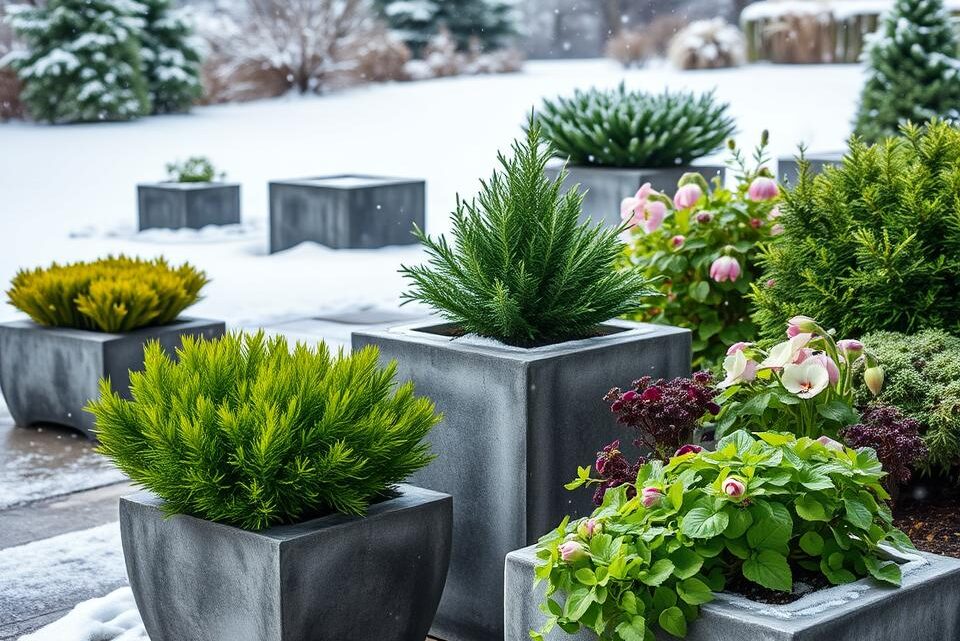
Garden enthusiasts across the United Kingdom are discovering the exceptional potential of concrete planter blocks for creating stunning year-round garden displays. Your outdoor spaces can transform into resilient landscapes that withstand challenging winter conditions while maintaining visual appeal.
Concrete containers offer remarkable durability for gardeners seeking robust planting solutions. Winter-hardy plants combined with these sturdy structures enable you to design permanent garden features that remain attractive throughout seasonal changes. Planting concrete planter blocks with hardy plants represents an innovative approach to landscape design.
By selecting appropriate winter-hardy plants and understanding proper planting techniques, you can create captivating year-round gardening environments. These concrete containers provide excellent opportunities to develop structured outdoor spaces that remain vibrant even during Britain’s coldest months.
Inhaltsverzeichnis
Key Takeaways
- Concrete planter blocks provide durable gardening solutions
- Winter-hardy plants ensure continuous landscape interest
- Strategic plant selection enhances container gardening success
- Permanent garden structures can withstand harsh weather conditions
- Year-round gardening becomes achievable with proper techniques
Understanding Concrete Planter Blocks and Their Benefits for Year-Round Gardening
Concrete planter blocks have revolutionised container gardening for UK gardeners seeking durable and versatile planting solutions. These robust containers offer exceptional advantages for creating year-round displays that withstand challenging British weather conditions.
The unique properties of concrete planter blocks make them an outstanding choice for gardening enthusiasts. Their substantial thermal mass provides natural insulation for plant roots, protecting delicate vegetation during temperature fluctuations. Unlike fragile plastic or wooden containers, these durable planters maintain structural integrity through multiple seasonal cycles.
- Exceptional durability against freeze-thaw cycles
- Natural temperature regulation for plant roots
- Versatile design options for various garden styles
- Long-lasting performance with minimal maintenance
When considering container gardening options, concrete planter blocks stand out for their architectural flexibility. You can create raised beds, retaining walls, and tiered garden features that add visual interest to your outdoor space. The weight of these blocks provides stability in exposed locations, preventing toppling during winter storms.
Available in multiple sizes and configurations, concrete planter blocks suit different garden designs and plant requirements. Their aesthetic versatility ranges from sleek modern finishes to textured surfaces that complement traditional landscape styles.
Invest in concrete planter blocks for a reliable, long-term gardening solution that transforms your outdoor living space.
Selecting the Right Hardy Plants for Your Climate
Choosing the perfect hardy plants for your concrete planter blocks requires understanding the unique climate zones across the United Kingdom. Your winter-hardy plants selection depends on carefully evaluating local conditions and microclimates that impact plant survival.
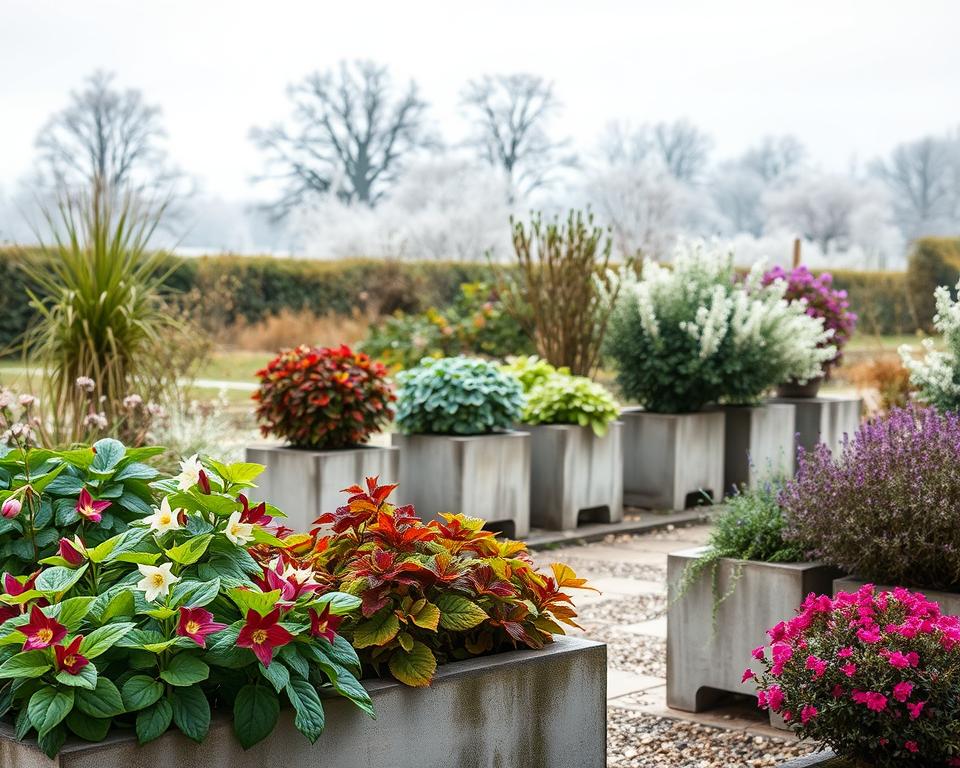
The UK’s diverse landscape presents multiple winter hardiness zones, primarily ranging from zones 7 to 9. These climate zones UK dictate which frost-resistant plants will thrive in your specific region.
Understanding UK Hardiness Zones
When selecting cold-hardy perennials, consider these key factors:
- Regional temperature variations
- Proximity to coastal areas
- Urban heat island effects
- Local microclimate conditions
Perennials Perfect for Concrete Containers
Some top hardy plants UK for concrete planters include:
- Helleborus niger (Christmas Rose)
- Bergenia cordifolia (Elephant’s Ears)
- Lavender varieties
- Sedum spectabile
Evergreen Options for Year-Round Interest
Create visual appeal with evergreen selections that withstand winter temperatures. Look for plants rated for one zone colder than your specific area to ensure robust survival in exposed concrete containers.
Pro tip: Observe neighbouring gardens to understand which plants naturally thrive in your local microclimate.
Preparing Your Concrete Planter Blocks for Planting
Successful planter preparation begins with understanding the unique characteristics of new concrete planters. Fresh concrete contains lime that can potentially harm plant growth by creating alkaline soil conditions. Your approach to concrete container preparation will determine the health and vitality of your garden.
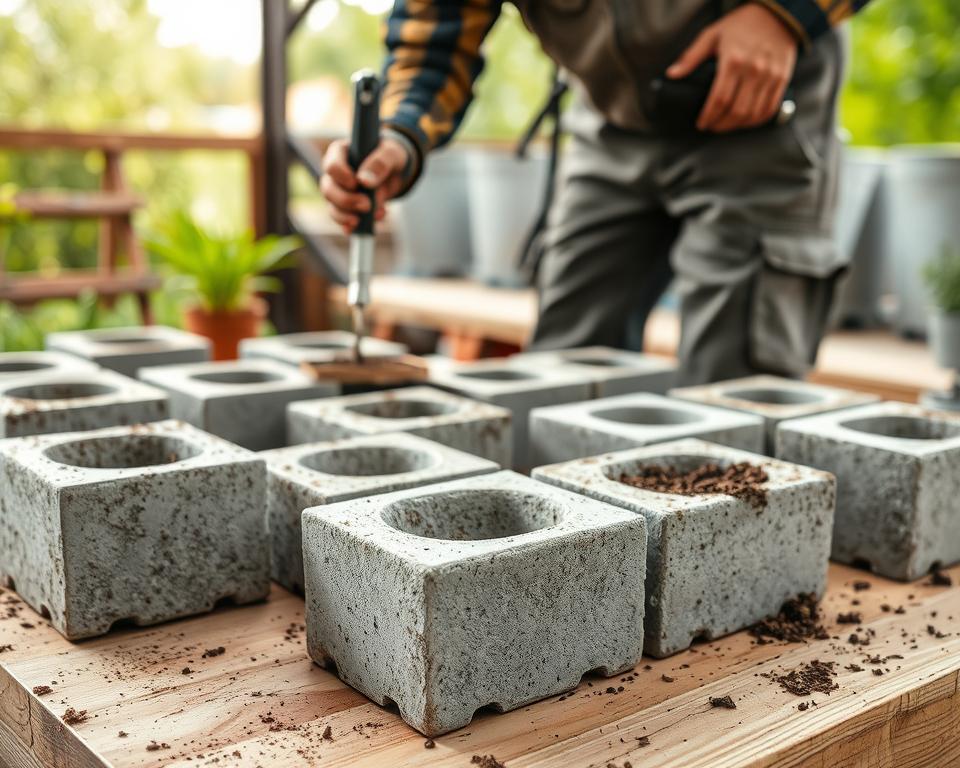
Weathering concrete is a critical step before introducing plants. You have several effective methods to neutralise the alkaline environment:
- Natural weathering: Leave new concrete planters outdoors for 4-6 weeks, allowing rain to gradually reduce surface alkalinity
- Vinegar solution: Scrub planter interiors with a diluted vinegar mixture (1:10 ratio) to accelerate neutralisation
- Specialised concrete sealants that create a protective barrier between concrete and soil
When preparing used concrete planters, thorough cleaning is essential. Inspect your blocks carefully for:
- Structural cracks or chips
- Surface damage
- Potential need for repair or replacement
Cleaning techniques include using diluted bleach solution for sterilisation or hot soapy water for a chemical-free approach. Pro tip: Position your planter blocks in their final location before filling them with soil, as they become extremely heavy once loaded.
Your careful planter preparation will create an optimal environment for winter-hardy plants to thrive in concrete containers.
Drainage Considerations for Winter-Hardy Container Gardens
Successful container gardening relies on effective drainage solutions, especially in the challenging British winter landscape. Proper water management prevents winter waterlogging and protects your hardy plants from potential frost damage.
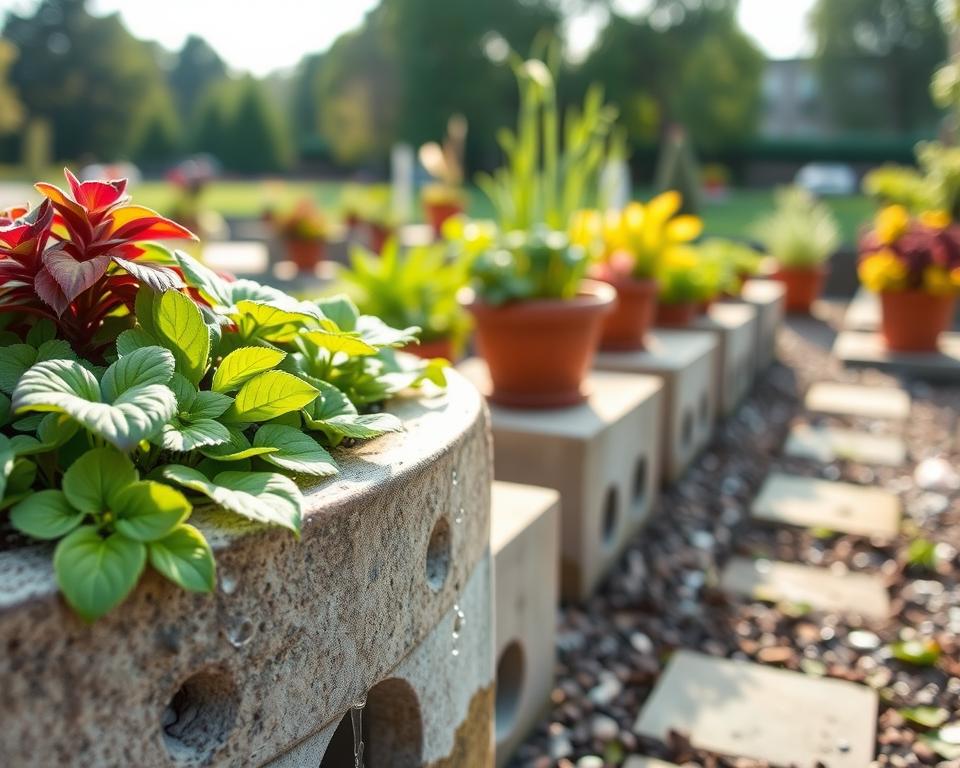
Understanding drainage is crucial for maintaining healthy plants in concrete planter blocks. Your container drainage strategy can make the difference between thriving greenery and damaged root systems.
Creating Adequate Drainage Holes
Drainage holes are fundamental to preventing water accumulation. When preparing concrete planters, consider these key approaches:
- Use a masonry drill bit (12-16mm diameter)
- Create 3-4 holes for smaller blocks (30cm width)
- Install 6-8 holes for larger blocks (60cm or more)
“Precise concrete drilling techniques protect your plants from potential water-related stress.”
Layering Materials to Prevent Waterlogging
Strategic layering helps manage water flow and prevents soil compaction. Consider these planter drainage techniques:
- Place pottery shards or landscape fabric over drainage holes
- Use a gravel base layer (1-2cm thick)
- Select well-draining potting mix
By implementing these water management strategies, you’ll create resilient winter-hardy container gardens that withstand harsh British weather conditions.
Choosing the Optimal Soil Mix for Concrete Planters
Selecting the right soil mix for containers is crucial for successful gardening in concrete planter blocks. Your container growing medium plays a vital role in plant health, drainage, and overall performance throughout the year.
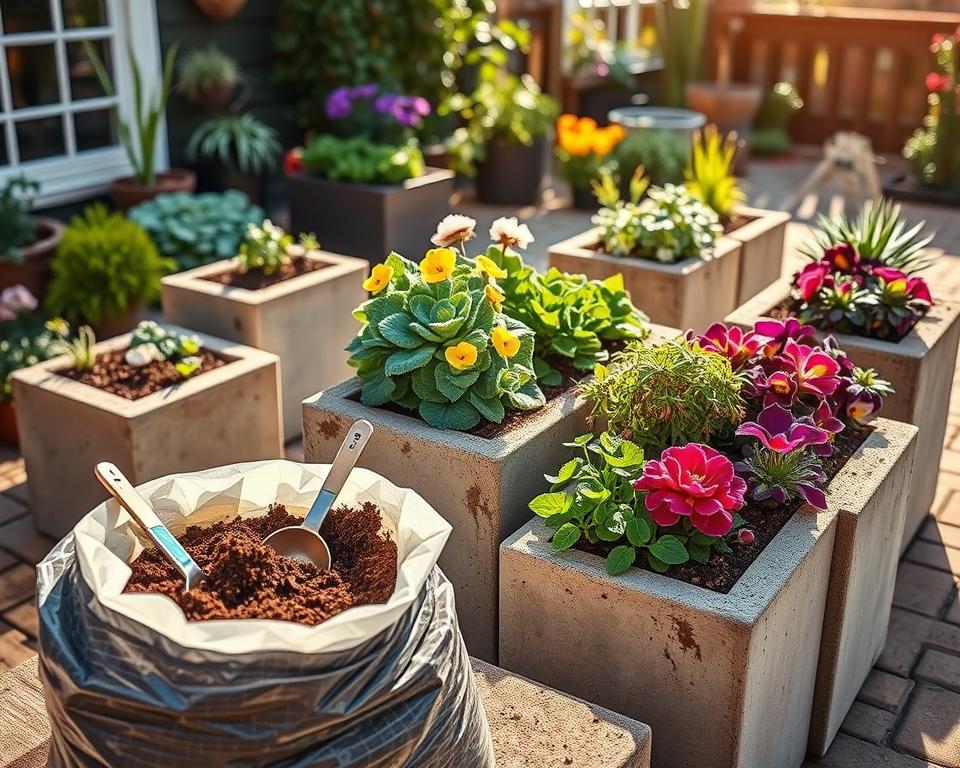
When creating a well-draining soil for your concrete planters, consider these key components:
- Quality multipurpose compost
- Horticultural grit or perlite
- Composted bark
- Slow-release fertiliser
A recommended potting compost mix for most plants combines:
| Ingredient | Percentage | Purpose |
|---|---|---|
| Multipurpose Compost | 60% | Nutrient base |
| Horticultural Grit | 20% | Drainage improvement |
| Composted Bark | 20% | Structure and aeration |
For Mediterranean plants requiring extra drainage, adjust your soil mix to include more grit and sharp sand. Avoid using garden soil directly in containers, as it can compact and restrict root growth.
Consider adding John Innes compost for improved stability and nutrient retention, especially in exposed locations where lightweight containers might topple.
Planting Concrete Planter Blocks with Hardy (Winter-Hardy) Plants
Transforming your concrete planter blocks into vibrant garden spaces requires careful attention to the planting technique. Successful plant establishment depends on understanding the nuanced container planting method that supports robust root development.
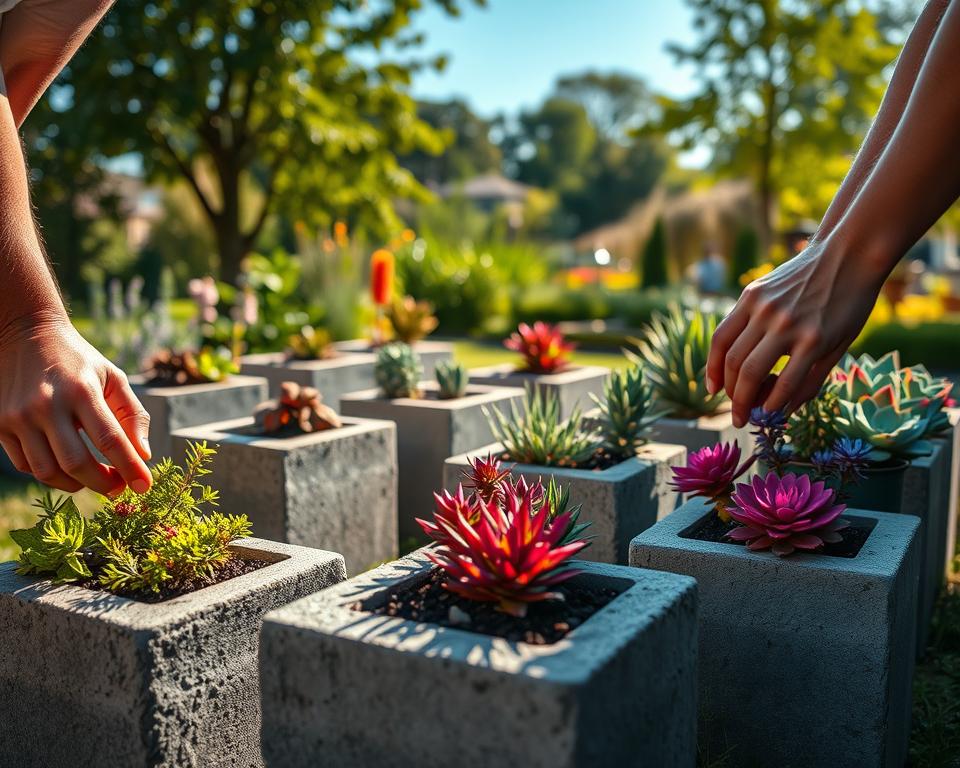
Your plant installation process begins with thoughtful root preparation. Before starting the planting process, gather essential tools and materials to ensure a smooth container planting experience.
Essential Preparation Steps
- Select healthy plants suitable for your specific climate zone
- Gather clean gardening tools
- Prepare high-quality potting mix
- Check concrete planter block drainage
Step-by-Step Planting Technique
- Inspect root system for healthy growth patterns
- Gently remove plant from original container
- Assess proper planting depth carefully
- Position plant in concrete block
- Backfill with prepared soil mix
- Water thoroughly
| Planting Stage | Key Considerations |
|---|---|
| Root Preparation | Untangle circling roots, trim if necessary |
| Soil Placement | Fill in layers, avoiding air pockets |
| Initial Watering | Saturate soil completely, allow drainage |
Your success with container planting depends on meticulous attention to each step. By following these precise container planting steps, you’ll create an environment where winter-hardy plants can thrive magnificently.
Protecting Your Plants During Harsh Winter Conditions
Winter protection is crucial for maintaining healthy plants in concrete planter blocks across the United Kingdom. Frost protection requires strategic approaches tailored to your specific garden environment and plant selections.
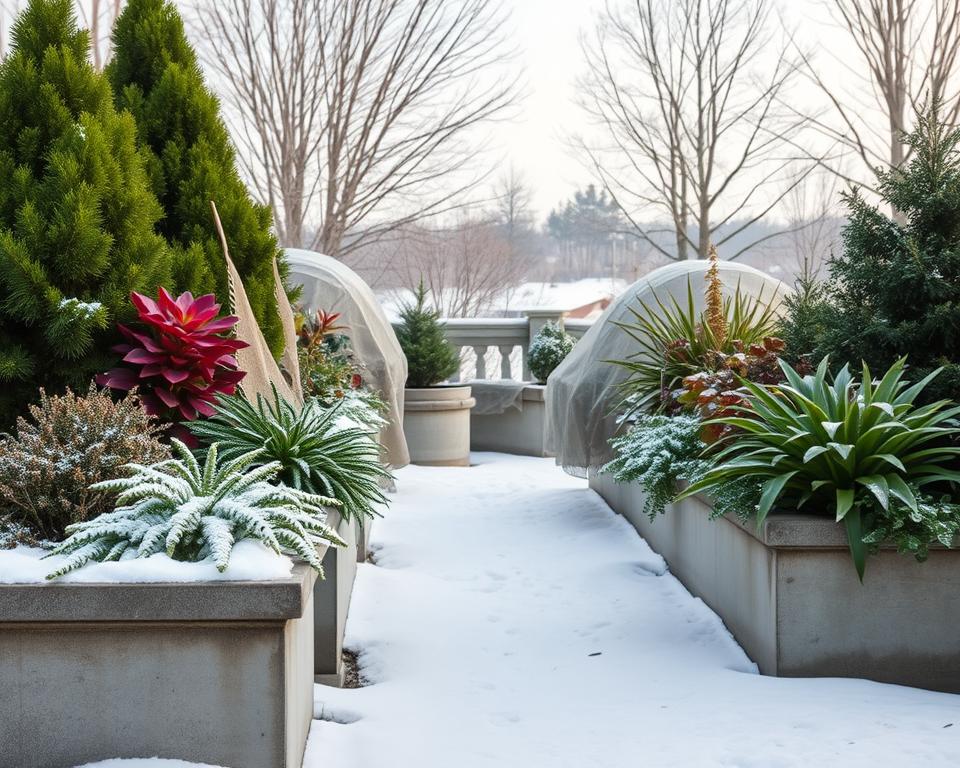
Different regions of the UK demand unique cold weather care strategies. Coastal and southern gardens might require minimal intervention, while exposed locations in the Scottish Highlands need comprehensive plant insulation methods.
- Wrap evergreen shrubs loosely with horticultural fleece
- Create temporary windbreaks using stakes and hessian
- Preserve herbaceous perennials’ dead foliage for natural protection
Your concrete planter block’s winter survival depends on multiple protective techniques. Consider these essential strategies for effective plant insulation:
| Protection Method | Effectiveness | Effort Level |
|---|---|---|
| Bubble wrap insulation | High | Low |
| Straw bale surrounding | Medium | Medium |
| Mulching with organic material | High | Low |
Elevating your concrete planters on pot feet helps prevent drainage holes from freezing. Choose materials like terracotta or purpose-made supports to ensure proper water management during winter months.
By implementing these winter protection strategies, you’ll safeguard your plants against harsh UK weather conditions while maintaining their health and vitality.
Maintenance Requirements for Hardy Plants in Concrete Blocks
Successful plant maintenance in concrete planter blocks requires a strategic approach to container care and seasonal tasks. Understanding the nuanced irrigation needs of your plants ensures healthy growth throughout the year.
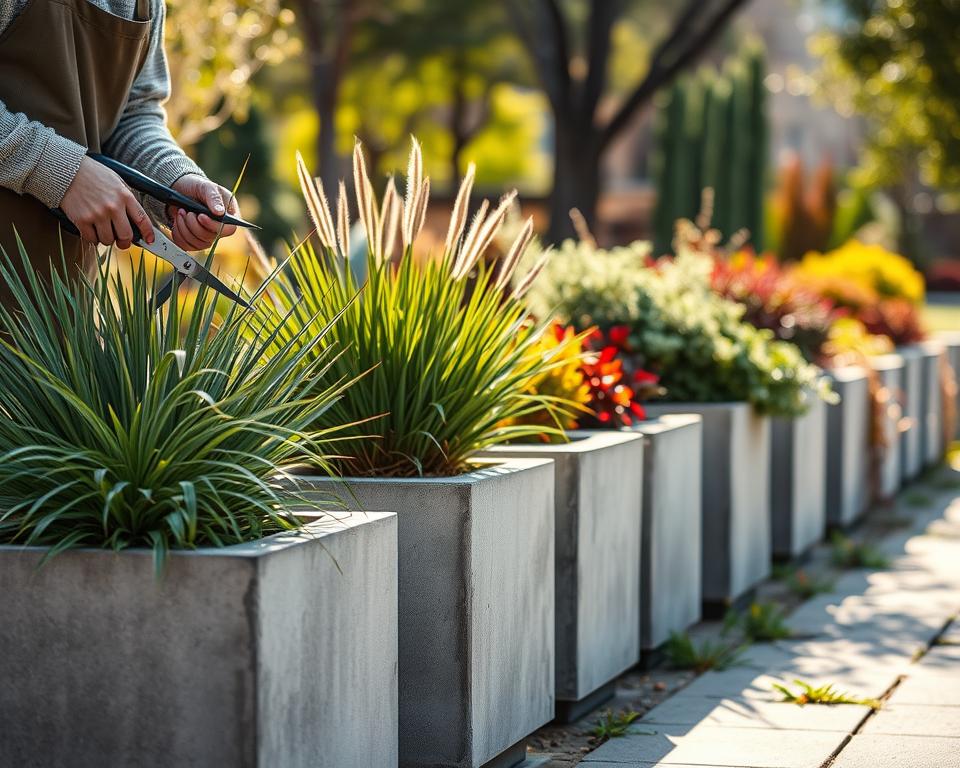
Your ongoing plant care strategy should adapt to changing seasonal conditions. Different watering schedules are crucial for maintaining optimal plant health in container environments.
Seasonal Watering Schedules
Container watering techniques vary dramatically across seasons:
- Spring/Summer: Water 2-3 times weekly
- Autumn: Reduce watering frequency
- Winter: Water sparingly, every 2-3 weeks
Moisture Management Techniques
Effective irrigation needs careful consideration:
| Watering Method | Pros | Cons |
|---|---|---|
| Manual Watering | Personalised plant assessment | Time-consuming |
| Drip Irrigation | Consistent moisture | Initial setup cost |
Nutrient Management Strategies
Your fertilisation approach should complement your watering schedule. Slow-release fertilisers work best in concrete planter blocks, providing steady nutrient distribution throughout the growing season.
- Spring: High-nitrogen fertilisers
- Summer: Balanced nutrient mix
- Autumn: Phosphorus-rich formulations
By implementing these targeted maintenance techniques, you’ll ensure your hardy plants thrive in concrete blocks year-round.
Design Ideas for Arranging Concrete Planter Blocks
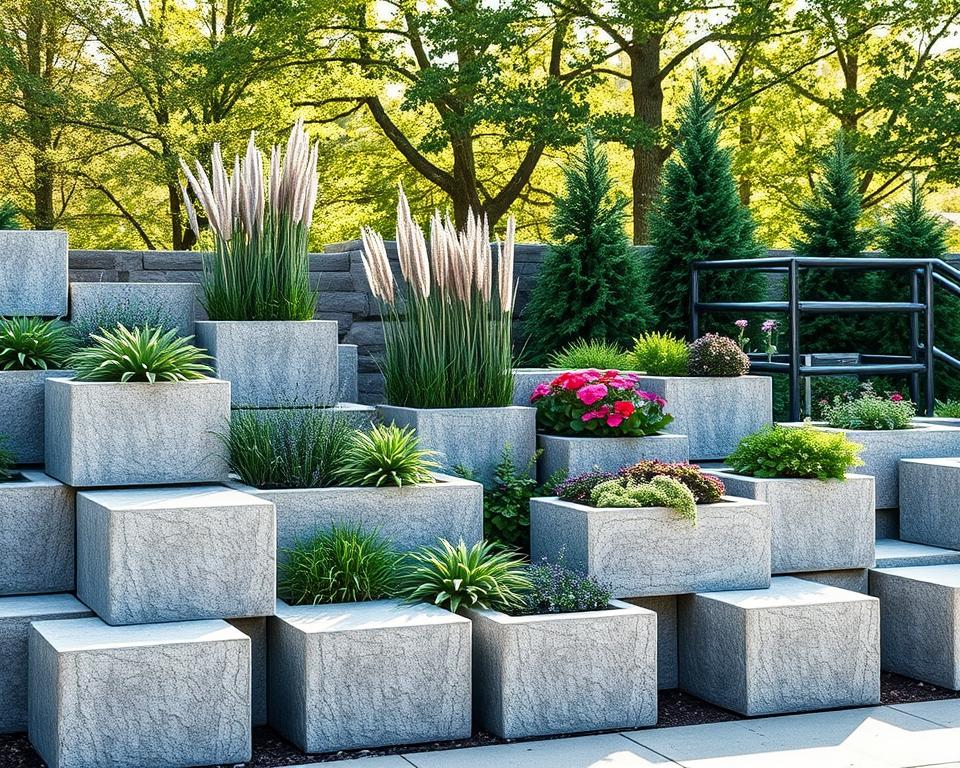
Transforming your garden design with concrete planter blocks offers endless creative possibilities for landscape design. These versatile elements allow you to craft unique planter arrangements that elevate your outdoor space from ordinary to extraordinary.
When exploring creative layouts, consider these innovative approaches to arranging your concrete planter blocks:
- Linear Arrangements: Create clear garden boundaries or define pathways with strategically placed blocks
- Clustered Groupings: Develop focal points by clustering planters of varying heights
- Asymmetrical Compositions: Break traditional design rules with dynamic, informal arrangements
Your planter arrangement can dramatically impact the visual aesthetic of your garden. Symmetrical designs work brilliantly for formal spaces, while irregular layouts suit more contemporary landscapes. Consider mixing concrete block sizes to add depth and visual interest.
Key design strategies include:
- Integrating blocks with existing garden features
- Using different plant textures and colours
- Creating vertical interest through tiered placements
Experiment with seasonal design variations that showcase different plant combinations throughout the year. Your concrete planter blocks can become dynamic canvases that transform with each season, reflecting the natural rhythms of your garden landscape.
Common Challenges and Troubleshooting Solutions
Winter gardening with concrete planter blocks presents unique plant problems that require careful attention. Container gardening challenges often emerge during cold months, testing even the hardiest of garden setups. Your ability to recognise and respond to frost damage and cold injury will determine the survival of your winter garden.
Freeze protection strategies become critical when temperatures drop. Recognising early signs of winter damage helps gardeners implement effective problem-solving techniques. Leaf scorch and stem dieback are two primary indicators of cold stress that require different intervention approaches. Some plants may appear completely damaged but can surprisingly recover with proper care.
Identifying Frost Damage Levels
Understanding the extent of cold injury is crucial for winter damage management. Surface-level frost damage might look dramatic but often allows plants to regenerate. Evergreen plants are particularly susceptible to desiccation, where frozen ground prevents moisture replacement. Strategic positioning of your concrete planter blocks near warm walls or under protective canopies can significantly reduce the risk of severe cold exposure.
Recovery and Prevention Techniques
Your troubleshooting guide should include careful assessment before taking drastic action. Wait until spring growth begins to determine true plant damage extent. Pruning should only occur when you can identify healthy green tissue beneath the bark. Mulching and selecting plants with robust hardiness ratings provide essential protection against winter’s harshest conditions.
FAQ
What are the best hardy plants for concrete planter blocks in the UK?
Excellent hardy plant options for concrete planter blocks in the UK include evergreen shrubs like boxwood, perennials such as hellebores and heuchera, ornamental grasses like Festuca glauca, and winter-flowering plants like Cyclamen and Helleborus niger. These plants can withstand cold temperatures and provide visual interest throughout the year.
How do I prevent waterlogging in concrete planter blocks?
To prevent waterlogging, ensure your concrete planter blocks have adequate drainage holes (3-4 holes for smaller blocks, 6-8 for larger ones). Use a well-draining soil mix containing approximately 20% horticultural grit or perlite, and consider raising your planters on pot feet to improve air circulation and drainage.
When is the best time to plant in concrete planter blocks?
The optimal planting time is autumn (September-November), which allows roots to establish during mild, moist conditions before winter. This gives plants a head start for spring growth. Spring planting (March-April) is also suitable but may expose plants to summer heat stress before full establishment.
How do I protect plants in concrete blocks during harsh winter?
Protect your plants by using horticultural fleece to create a loose protective cover, mulching with 5-7cm of organic material, and positioning planters in sheltered locations. Consider grouping planters together and surrounding them with straw bales for additional insulation against freezing temperatures.
What type of soil mix works best for concrete planter blocks?
An ideal soil mix for concrete planter blocks combines 60% quality multipurpose compost, 20% horticultural grit or perlite, and 20% composted bark. This provides excellent drainage while retaining adequate moisture. For Mediterranean plants, adjust the mix to 50% compost, 30% grit, and 20% sharp sand.
How often should I water plants in concrete planter blocks?
Watering frequency varies by season. During spring and summer, water 2-3 times weekly or daily during hot spells. In winter, reduce watering to once every 2-3 weeks, and only when the soil appears dry. Always check soil moisture by inserting your finger 5cm deep before watering.
Can I use concrete planter blocks in small urban gardens?
Absolutely! Concrete planter blocks are excellent for small urban gardens, offering versatile design options. They can create vertical gardens, define spaces, provide seating, and add architectural interest. Their durability and thermal mass make them ideal for creating microclimate zones in compact outdoor spaces.