How to build a wooden porch
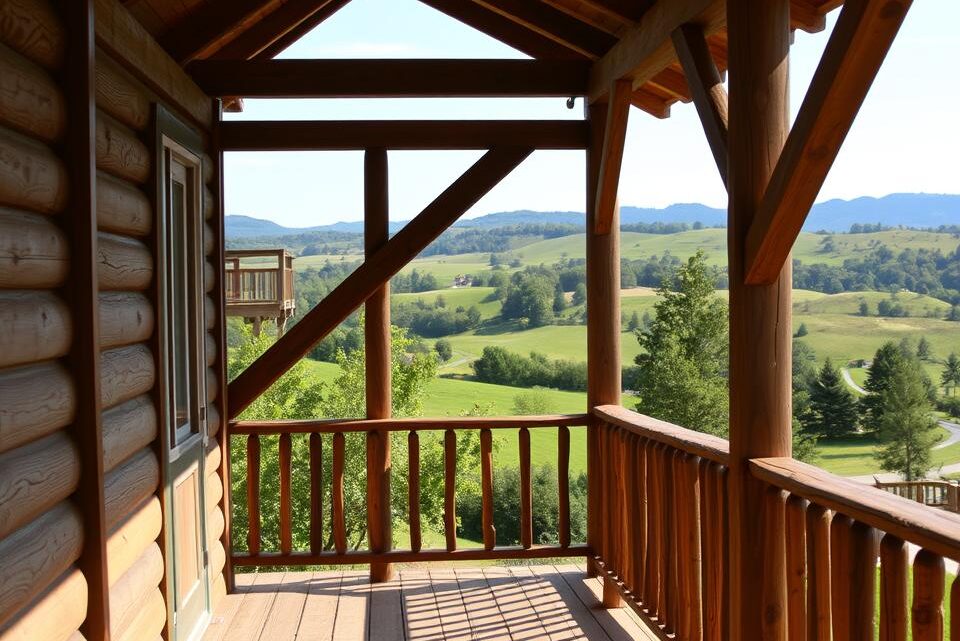
Transforming your home’s exterior with a beautifully crafted wooden porch can be an exciting DIY porch building project that adds both value and charm to your property. Whether you’re a seasoned DIY enthusiast or a first-time home improver, creating a wooden porch is an achievable goal with the right guidance and preparation.
Wooden porch construction offers homeowners a unique opportunity to enhance their living space, create an inviting entrance, and showcase their personal style. This comprehensive guide will walk you through each step of the process, from initial planning to final touches, ensuring you can confidently tackle this rewarding home improvement project.
Inhaltsverzeichnis
Key Takeaways
- Learn essential techniques for successful wooden porch construction
- Understand the importance of proper planning and preparation
- Discover safety considerations for DIY porch building
- Explore design options to complement your home’s architecture
- Gain confidence in tackling a significant home improvement project
Essential Tools and Materials for Your Porch Project
Building a wooden porch requires careful preparation and the right selection of porch building tools and wooden porch materials. Successful construction depends on having the correct equipment and understanding how to use it safely.
Before starting your project, you’ll need to gather a comprehensive toolkit that ensures both efficiency and safety during construction.
Power Tools for Precision
- Circular saw for precise lumber cutting
- Cordless drill with multiple drill bits
- Impact driver for secure fastening
- Electric sander for smooth wood finishing
Safety Equipment for Porch Construction
Protecting yourself is paramount when working with power tools and wooden materials.
| Safety Item | Purpose |
|---|---|
| Safety goggles | Eye protection from wood chips and dust |
| Work gloves | Hand protection and improved grip |
| Dust mask | Respiratory protection |
| Hard hat | Head protection from falling objects |
Selecting Wooden Porch Materials
Choose high-quality timber suitable for British weather conditions. Pressure-treated timber offers excellent durability and resistance to moisture and decay.
- Cedar
- Pressure-treated pine
- Hardwood options like oak
Essential Hardware and Additional Materials
Complete your project with the right fasteners and supplementary materials:
- Galvanised nails and screws
- Concrete mix for footings
- Wood sealant
- Deck boards
- Exterior-grade wood preservative
Investing in quality porch building tools and wooden porch materials will ensure a sturdy, long-lasting porch that enhances your home’s exterior.
Planning and Design Considerations
Designing a wooden porch requires careful thought and strategic planning. UK homeowners must consider multiple factors to create a functional and aesthetically pleasing outdoor space that complements their property’s architectural style.
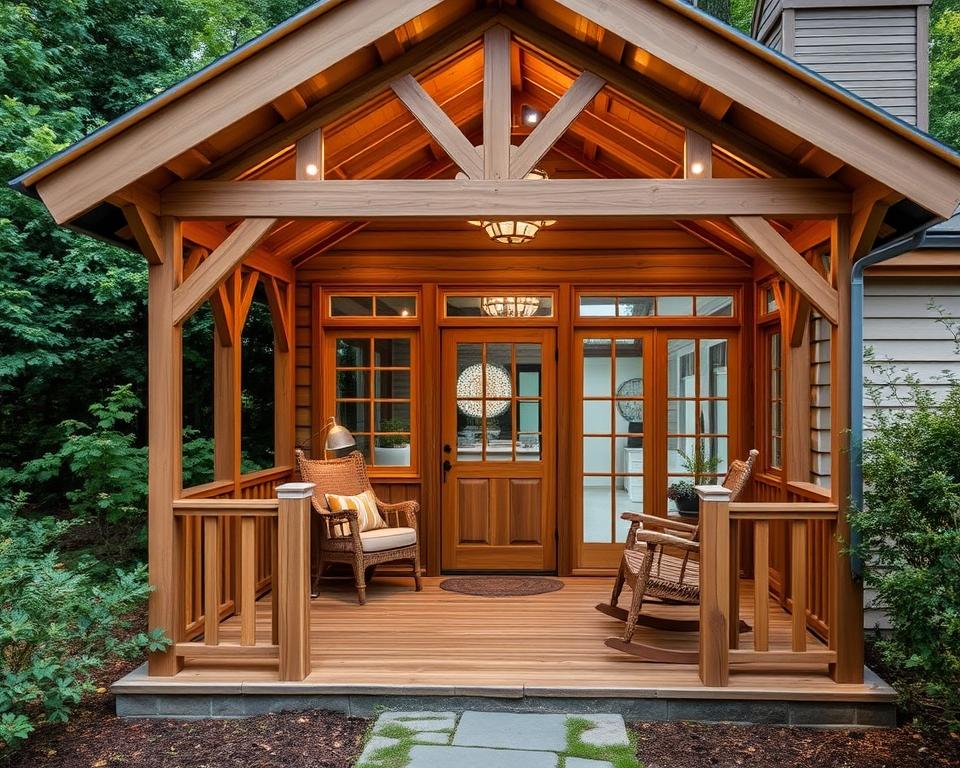
When exploring porch design ideas, start by assessing your available space and home’s existing architecture. UK porch styles vary widely, from traditional Victorian-inspired designs to modern minimalist structures.
- Measure your available exterior space precisely
- Consider your home’s existing architectural style
- Evaluate local climate conditions
- Select materials suitable for British weather
Wooden porch planning demands careful consideration of the UK’s unpredictable climate. Your design should incorporate features that protect against frequent rainfall while maximising natural light and ventilation.
| Porch Style | Key Characteristics | Best Suited For |
|---|---|---|
| Gable-End Porch | Triangular roof, traditional appearance | Period properties |
| Lean-To Porch | Simple, attached design | Modern homes |
| Wraparound Porch | Extended coverage, multiple entry points | Larger properties |
“A well-designed porch transforms your home’s exterior and creates a welcoming entrance.” – UK Architectural Design Magazine
By carefully selecting your porch design, you’ll create an inviting space that enhances your home’s kerb appeal and provides practical outdoor protection against British weather.
Obtaining Necessary Building Permits and Regulations
Navigating the maze of UK porch building regulations can seem daunting for homeowners. Understanding the legal requirements is crucial before starting your wooden porch project. Every successful construction begins with proper planning and compliance with local guidelines.
Embarking on a porch construction requires careful consideration of various regulatory aspects. The process involves multiple steps to ensure your project meets all necessary standards and legal requirements.
Local Council Requirements
Most porch projects in the UK require careful attention to planning permission. The specific regulations can vary depending on several key factors:
- Porch size and dimensions
- Location of the property
- Proximity to property boundaries
- Local conservation area restrictions
Building Standards and Codes
Wooden porches must adhere to strict building standards for wooden porches. These regulations ensure structural integrity, safety, and compliance with national building codes.
| Regulation Category | Key Requirements |
|---|---|
| Structural Integrity | Meets load-bearing specifications |
| Fire Safety | Uses fire-resistant materials |
| Accessibility | Complies with disability access standards |
Insurance Considerations
Updating your home insurance is a critical step in the planning permission for porches. Inform your insurance provider about the new construction to ensure full coverage and compliance.
Always consult with local authorities and a professional builder to navigate the complex landscape of UK porch building regulations.
Professional advice can save you time, money, and potential legal complications. Taking the time to understand and follow these regulations will ensure a smooth and successful porch construction project.
How to Build a Wooden Porch: Step-by-Step Guide
Embarking on a DIY wooden porch construction project can be an exciting challenge for homeowners looking to enhance their property’s kerb appeal. Step-by-step porch building requires careful planning and attention to detail, but with the right approach, even novice DIY enthusiasts can create a stunning outdoor space.
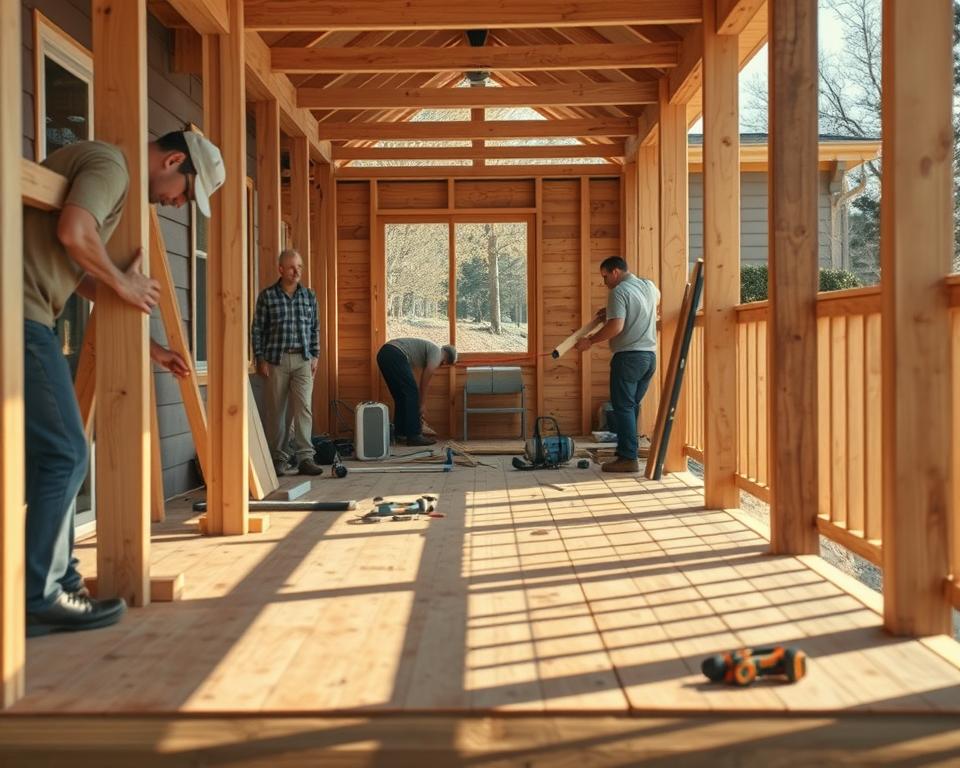
Porch construction techniques involve several critical stages that transform your outdoor area from a simple entrance to a welcoming extension of your home. Before diving into the project, gather your tools and mentally prepare for a rewarding DIY experience.
- Measure and mark the proposed porch area precisely
- Clear the ground of vegetation and debris
- Ensure a level surface for foundation work
- Double-check local building regulations
*”Preparation is the key to successful DIY construction projects”* – Professional Carpenter’s Wisdom
The process of wooden porch construction breaks down into manageable steps that require patience and methodical approach. Precision matters more than speed when creating a durable and attractive outdoor structure.
- Site preparation and ground levelling
- Foundation and support structure installation
- Framing the porch structure
- Decking installation
- Adding finishing touches and protective treatments
Your DIY wooden porch will not only add value to your property but also provide a charming space for relaxation and outdoor enjoyment. Each stage requires careful execution and commitment to quality craftsmanship.
Foundation and Support Structure Installation
Creating a robust wooden porch begins with a solid foundation. Proper porch foundation installation is crucial for ensuring the longevity and stability of your outdoor space. The foundation serves as the critical base that supports the entire wooden porch support structure.
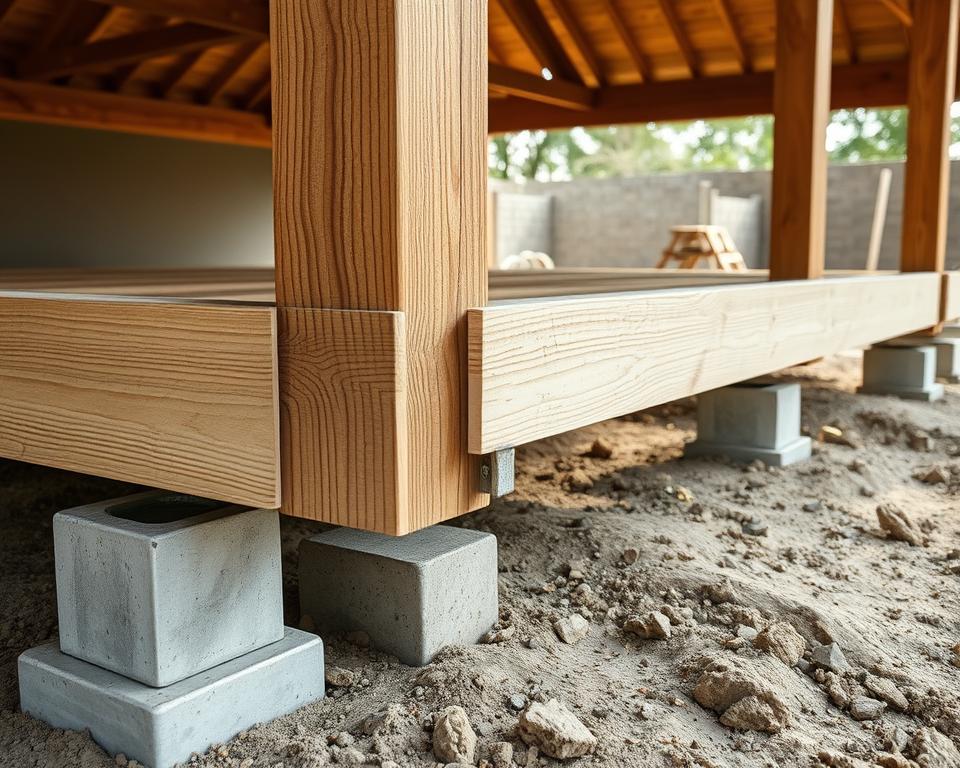
Understanding the key components of a sturdy foundation will help you build a porch that stands the test of time. Let’s explore the essential steps for creating a reliable base.
Concrete Footings Preparation
Concrete footings for porches require careful planning and precise execution. Here are the critical steps:
- Determine the appropriate depth based on local frost lines
- Mark out precise locations for each footing
- Dig holes to the recommended depth
- Create a level base with compacted gravel
“A strong foundation is the backbone of any successful porch project.” – Professional Carpenter
Post Installation Techniques
Proper post installation is vital for maintaining the structural integrity of your wooden porch support structure. Key considerations include:
- Use pressure-treated lumber for ground contact
- Ensure posts are perfectly vertical using a spirit level
- Secure posts with concrete for maximum stability
- Allow adequate curing time for concrete footings
Beam and Joist Framework
The final stage involves creating a robust beam and joist framework. This step connects your foundation to the porch decking, providing essential structural support.
Pro tip: Use galvanised hardware to prevent rust and ensure long-lasting connections between beams and joists.
Decking Installation and Pattern Layout
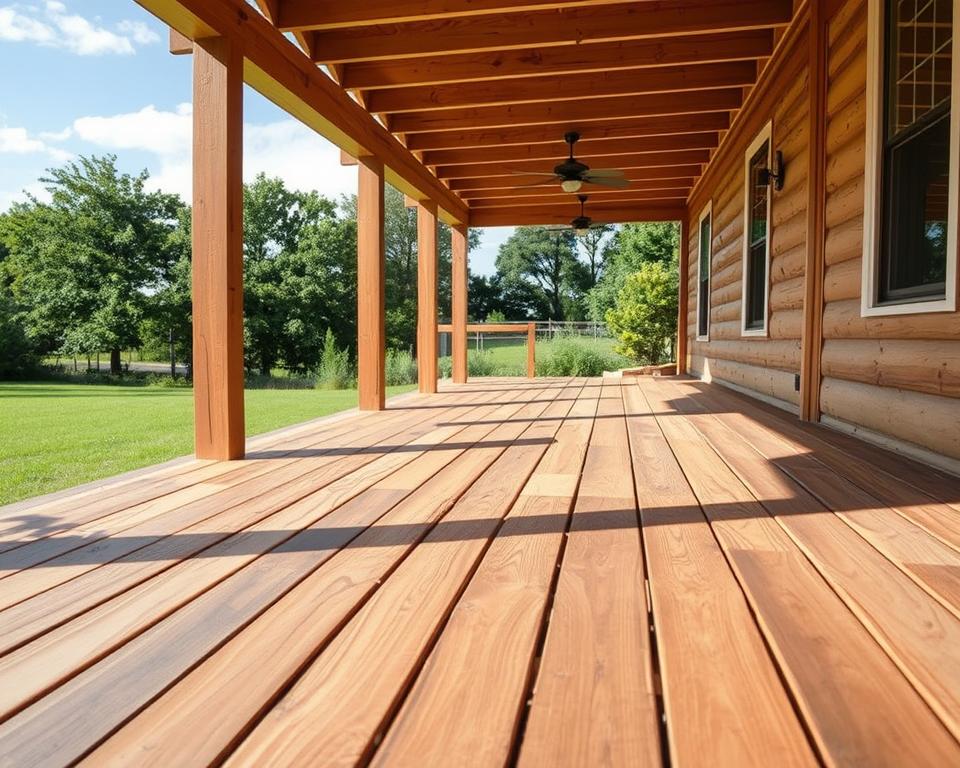
Transforming your porch begins with careful porch decking installation. Selecting the right wooden deck patterns can elevate your outdoor space from ordinary to extraordinary. The key to successful decking techniques for porches lies in meticulous planning and precise execution.
When choosing decking materials, consider the unique challenges of British weather. Hardwoods like oak and cedar offer exceptional durability, while composite materials provide low-maintenance alternatives. Each option brings distinct advantages to your porch design.
- Select weather-resistant materials
- Plan your deck pattern carefully
- Ensure proper board spacing
- Use hidden fastening systems
Popular wooden deck patterns can dramatically enhance your porch’s visual appeal:
| Pattern | Visual Impact | Difficulty Level |
|---|---|---|
| Straight Lay | Classic and Simple | Easy |
| Diagonal | Dynamic and Modern | Moderate |
| Herringbone | Sophisticated and Intricate | Complex |
Professional decking techniques require precision. Maintain consistent board spacing to allow water drainage and prevent moisture damage. Cut boards carefully around posts and edges to achieve a clean, professional finish.
Hidden fastening systems offer a sleek appearance while protecting your deck’s structural integrity. These modern solutions minimise visible screws, creating a smooth and polished look that showcases your craftsmanship.
Adding Railings and Balusters
Porch railing installation is a critical step in creating both a safe and visually appealing outdoor space. The right railings not only protect your family but also enhance the architectural beauty of your home.
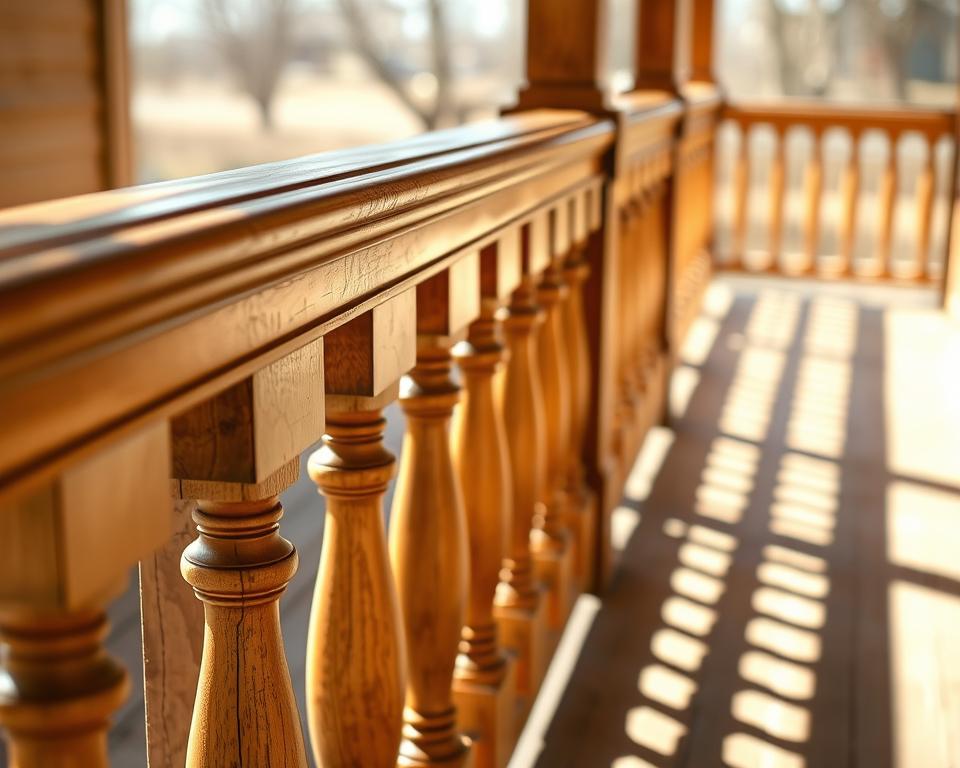
When considering baluster designs for wooden porches, homeowners have multiple options to explore. The UK porch safety standards provide clear guidelines to ensure structural integrity and protection.
Safety Requirements
Adhering to UK porch safety standards is paramount when installing railings. Key considerations include:
- Minimum railing height of 1 metre for elevated porches
- Maximum gap between balusters: 100mm
- Robust structural support to withstand lateral pressure
- Non-slip surfaces for added safety
Design Options
Baluster designs for wooden porches range from traditional to contemporary styles. Homeowners can choose from:
- Classic wooden spindles
- Metal balusters with decorative patterns
- Glass panel railings for modern aesthetics
- Wrought iron designs with intricate details
Installation Methods
Successful porch railing installation requires precision and careful planning. Professional techniques include:
- Post-to-post mounting
- Over-the-post attachment
- Integrated structural support
- Secure anchoring to prevent movement
By carefully selecting and installing your porch railings, you’ll create a safe, beautiful outdoor space that complements your home’s architectural style.
Finishing Touches and Weather Protection
Completing your wooden porch requires careful attention to wooden porch finishing techniques that protect your investment from the unpredictable British weather. The right approach to weather protection for porches can extend the life of your outdoor space and maintain its beautiful appearance for years to come.
Selecting the appropriate finish is crucial for long-lasting durability. Your porch maintenance tips should begin with thorough surface preparation:
- Sand the wood surface completely
- Remove all dust and debris
- Ensure the surface is completely dry
Different finishes offer unique benefits for protecting your wooden porch:
| Finish Type | Protection Level | Durability |
|---|---|---|
| Clear Sealant | Moderate | 2-3 years |
| Exterior Wood Stain | High | 3-5 years |
| Exterior Paint | Maximum | 5-7 years |
For optimal weather protection, consider applying a water-repellent treatment that prevents moisture penetration. Regular maintenance is key to preserving your porch’s structural integrity and aesthetic appeal.
Recommended maintenance schedule for your wooden porch includes annual inspections, cleaning, and reapplying protective finishes every 2-3 years. This proactive approach will help your porch withstand the challenging British climate while maintaining its natural beauty.
Conclusion
Building a wooden porch represents a significant milestone in home improvement. Your DIY porch building success transforms not just your property’s exterior but creates a valuable living space that enhances kerb appeal and functionality. By investing time and skill, you’ve crafted an outdoor area that will provide years of enjoyment and relaxation.
The wooden porch benefits extend beyond aesthetic appeal. You’ve added valuable square metres to your home, created a welcoming entrance, and developed practical skills that will serve you in future renovation projects. Each carefully installed board and precisely measured support represents your commitment to quality craftsmanship and personal achievement.
Your home improvement satisfaction comes from understanding every step of the construction process. From selecting materials to navigating building regulations, you’ve demonstrated remarkable dedication. This project is more than a structural addition—it’s a testament to your ability to transform vision into reality, creating a space that reflects your personal style and practical needs.
As you step onto your new wooden porch, take pride in what you’ve accomplished. The skills you’ve learned will inspire future home enhancement projects, proving that with careful planning, patience, and determination, remarkable transformations are possible. Your new outdoor space awaits countless memories and moments of pure enjoyment.
FAQ
Do I need planning permission to build a wooden porch?
In most cases, you’ll need to check with your local council. Typically, porches under 3 square metres don’t require planning permission, but this can vary depending on your specific location and property type. It’s always best to consult your local planning department to confirm the exact requirements for your wooden porch project.
What’s the best type of wood for a porch in the UK climate?
Pressure-treated timber is an excellent choice for UK weather conditions. Hardwoods like oak or cedar are also great options as they naturally resist moisture and decay. Composite decking materials can be a low-maintenance alternative that withstands the damp British climate particularly well.
How long does it typically take to build a wooden porch?
The duration depends on the complexity of your design and your DIY skills. A simple porch can take around 1-2 weeks for an experienced DIY enthusiast, while more complex designs might require 3-4 weeks. Professional builders might complete the project more quickly.
How much will it cost to build a wooden porch?
Costs can vary widely, typically ranging from £1,500 to £5,000, depending on the size, materials, and complexity of the design. A basic small porch might cost around £2,000, while a larger, more elaborate porch could exceed £4,500. Always budget for additional expenses like tools, permits, and potential unexpected costs.
Do I need special tools to build a wooden porch?
While you’ll need some basic power tools, including a circular saw, drill, and impact driver, many can be hired if you don’t own them. Essential tools include measuring tape, spirit level, saw horses, and safety equipment like work gloves and safety glasses. Some specialised tools might be needed for specific techniques.
How do I protect my wooden porch from weather damage?
Regular maintenance is key. Apply a high-quality wood sealant or exterior paint to protect against moisture. Consider using water-repellent treatments annually, and inspect the porch regularly for signs of wear, rot, or damage. Cleaning the porch and reapplying protective coatings every 2-3 years will significantly extend its lifespan.
Can I build a porch myself if I’m not an experienced DIY enthusiast?
While it’s possible, building a porch requires a good level of carpentry skills. If you’re a novice, consider taking some woodworking classes or starting with smaller projects first. Alternatively, you might want to work with an experienced friend or consider hiring a professional for more complex aspects of the build.
What safety considerations are important when building a porch?
Safety is paramount. Always wear appropriate personal protective equipment like safety glasses, work gloves, and dust masks. Ensure proper ladder safety, use tools correctly, and follow building regulations. Pay special attention to structural integrity, railing heights, and load-bearing considerations to create a safe and sturdy porch.