Natural Stone Wall for the Garden – Elegant Design
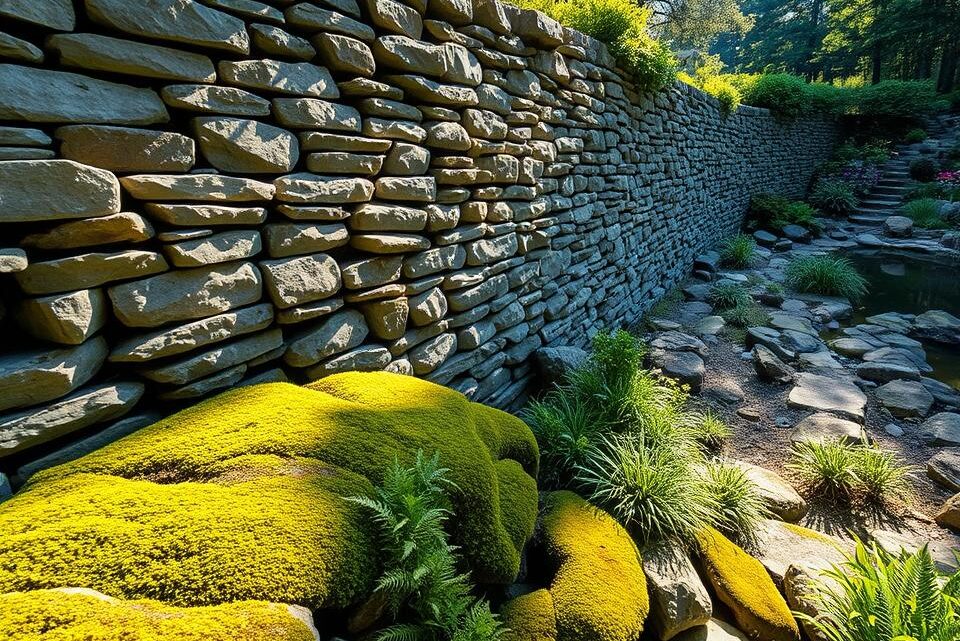
A natural stone wall for the garden brings immediate character and function to outdoor spaces. As an elegant garden wall, it defines boundaries, forms seating, supports terraces and anchors planting schemes. Homeowners, landscapers and designers across the UK choose stone garden wall solutions for their blend of beauty and practicality.
This article aims to guide readers through natural stone landscaping from concept to upkeep. We explain how to select materials, choose suitable styles and manage construction, while covering legal and cost considerations specific to Britain. The tone is practical and professional, with emphasis on durability and refined stone garden design.
The content is organised into 13 clear sections. Each section builds from benefits and keyword intent, through stone selection, construction methods and site preparation, to budgeting, permissions, sustainability, maintenance and lighting. Readers can follow the sequence to plan a project that delivers an elegant garden wall and lasting value.
Inhaltsverzeichnis
Key Takeaways
- Natural stone landscaping combines aesthetics with practical uses like seating and terracing.
- A garden stone wall adds curb appeal and long-term durability to UK gardens.
- This guide covers selection, construction, legal issues and maintenance for homeowners and professionals.
- Sections move from initial design choices to detailed site preparation and cost planning.
- Proper planning ensures an elegant garden wall that fits the landscape and budget.
Benefits of a Natural Stone Garden Wall
Natural stone brings practical advantages to any garden. A well-built stone feature lasts far longer than many alternatives and gives a clear visual anchor to beds, paths and terraces.
Longevity and durability compared with other materials
Granite, sandstone and limestone show high compressive strength and resist weathering in ways timber and many manufactured panels do not. Stone will not rot or fall prey to insect damage, and it tolerates UV exposure without significant loss of colour.
When constructed correctly, a stone structure can endure for decades or even centuries. Timber fences and sleepers often need replacement within a few years, while a durable garden wall can remain sound with minimal intervention.
Low maintenance advantages for UK gardens
Wet winters and freeze–thaw cycles in Britain put pressure on weak materials. Stone copes well with moisture and temperature shifts when drainage and foundations are right.
Routine care for a low maintenance stone wall is limited to occasional repointing and a gentle clean. Proper build techniques reduce long-term upkeep and help preserve long-lasting garden features.
Increase in property value and curb appeal
High-quality stonework lifts kerb appeal and signals care to prospective buyers. Garden boundaries, terraced beds and decorative low walls create neat, marketable outdoor space.
Estate agents often note that durable, attractive landscaping forms part of value-adding landscaping. Investing in solid stone elements can pay off at sale time by improving first impressions and perceived home quality.
Natural stone wall for the garden
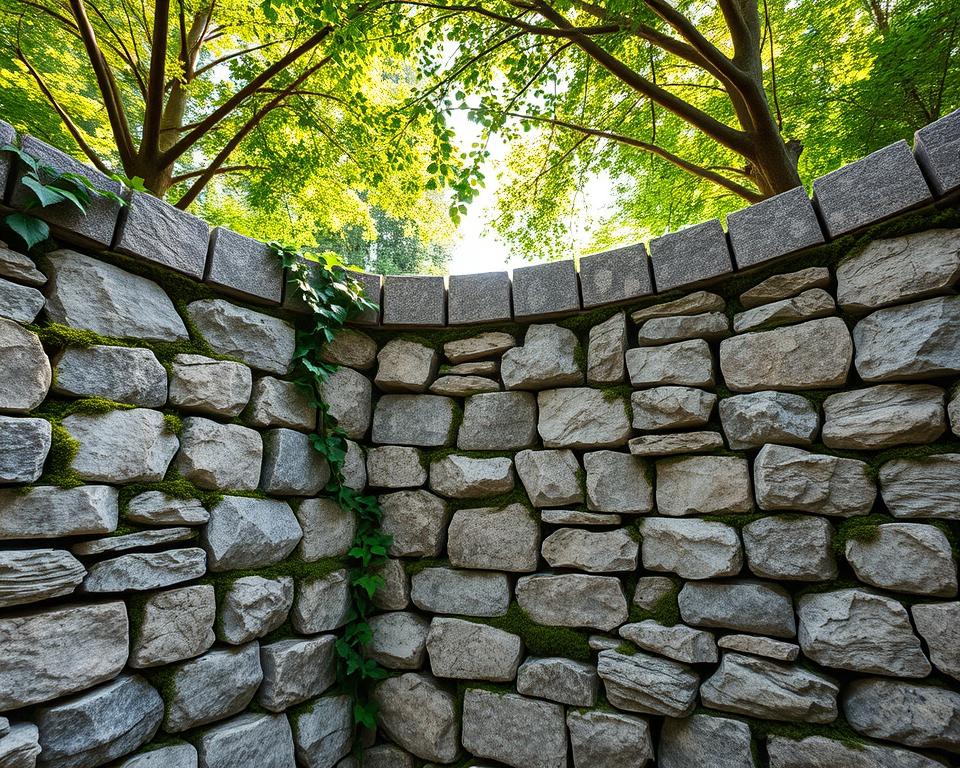
Searching for a natural stone wall for the garden meaning helps both browsers and builders. The phrase serves a dual purpose: it fulfils garden wall search intent online and it clarifies design aims for a project brief. People who type this term are often looking for inspiration, material guidance, installation methods or local tradespeople.
Why the phrase matters
Use the keyword to guide content so users find practical answers quickly. Clear language reduces time spent by homeowners and by professionals interpreting the request. A precise query speeds the path from idea to site survey.
Common British uses
Natural stone walls appear across UK garden styles, from Cotswold cottages to Yorkshire terraces. Typical roles include boundary walls, terraced beds, raised planters and seating walls. Historic dry-stone enclosures remain popular in rural areas while urban gardens favour low seating walls and decorative dividers.
Regional stone gives character. Cotswold stone brings warm honey tones. Yorkshire stone adds a cool, textured look. These local variations reflect vernacular style and influence maintenance and cost.
How to brief a stonemason or landscaper
A concise brief for stonemason work makes quotes more accurate. Include planned height and length, whether the wall will be retaining or decorative, and preferred stone type or reference photos. State the finish you want, such as pointed mortar or dry-stone coursing, and the expected budget and timeline.
Add site photographs, simple sketches and ground-level measurements. Note drainage needs and any foundation constraints. Mention Building Regulations if the wall is structural or over permitted height. Clear instructions reduce revisions and speed installation.
When preparing your brief for stonemason, list any access limits, known services in the ground and desired hand-finishes. This detail helps stonemasons such as those from Stonehenge Stone or local firms to price labour accurately and plan materials for the specific UK garden styles you favour.
Choosing the right stone type for your garden wall
Picking the right material shapes the look and performance of a garden wall. Consider appearance, wear, cost and where the wall will sit in relation to plants, paving and the house façade. Below are practical notes on popular stones, texture and colour choices, and sourcing options across the UK.
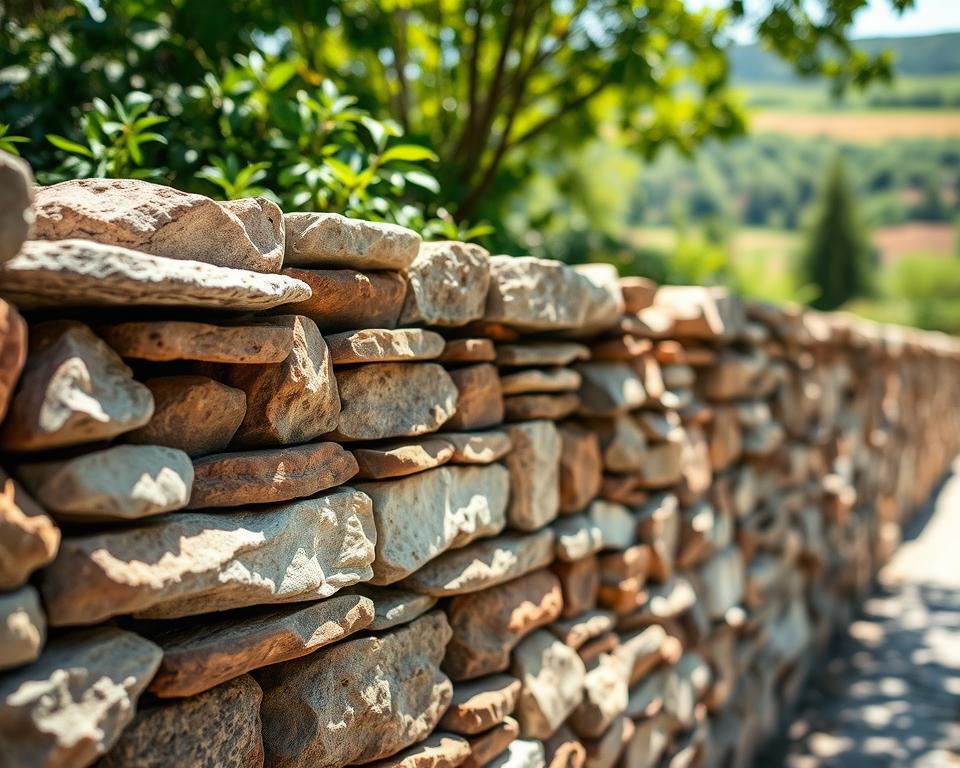
Popular stone options: sandstone, limestone, granite, slate
Sandstone is workable and offers warm hues that suit rustic and cottage gardens. A sandstone wall UK will blend well in Cotswold and southern landscapes. Typical uses include decorative boundary walls and stacked garden features. Costs are mid-range depending on finish and availability.
Limestone gives pale, classic tones that work with formal schemes. A limestone garden wall reads as timeless and pairs well with planted beds. It can stain from acid rain in exposed sites, but it remains durable. Expect moderate to high costs for high-quality blocks.
Granite is extremely hard and ideal for structural needs or coastal gardens. Granite walls resist frost and abrasion, so they suit retaining walls and heavy-duty borders. Granite walls are generally the most expensive of the common options.
Slate garden stone is thin and platey, perfect for decorative facings and cladding. Slate brings darker, dramatic colours and suits contemporary or moody schemes. It is often affordable for facing work but can be pricier for large volumes.
Matching stone texture and colour to your garden scheme
Texture and finish change the mood of a wall. Rough-hewn or split faces give a rustic, hand-built look. Sawn or honed finishes create a cleaner, modern appearance. Choose a finish that complements your architecture and planting style.
Compare stone samples against paving and brickwork before committing. View samples in natural daylight and at different times to check tone shifts. Use seasonal planting contrasts, such as silver foliage or deep green evergreens, to enhance paler limestone or warm sandstone.
Small sample panels let you test mortar colour and pointing style. Try darker mortar with slate garden stone to emphasise contrast. For sandstone wall UK projects, lighter mortar can keep the overall look soft and cohesive.
Sourcing locally versus imported stone in the UK
Local stone sourcing offers visual harmony with regional vernacular and often reduces transport costs and carbon. Quarries such as Portland for limestone or Cornwall and Aberdeenshire for granite provide regionally distinct options that feel authentic in local settings.
Imported stone can supply unique colours or rare textures not found in Britain. These choices widen design options but raise transport impact and may add to material cost. Reclaimed stone yards supply salvaged blocks for a weathered look and reduce environmental footprint.
| Stone | Characteristic | Common use | Relative cost |
|---|---|---|---|
| Sandstone | Warm hues, workable, varied textures | Decorative walls, cottage gardens | Mid-range |
| Limestone | Pale tones, classic look, weather-prone to staining | Formal borders, matched to stone houses | Moderate–high |
| Granite | Very hard, grey tones, highly durable | Retaining walls, coastal sites | High |
| Slate | Thin, platey, dark colours | Cladding, decorative facing | Low–mid |
| Reclaimed stone | Weathered character, sustainable | Heritage repairs, rustic features | Variable |
Design styles and aesthetic approaches
A well-chosen stone wall sets the tone for a garden. Styles range from weathered country edges to crisp urban lines. Each approach influences planting, pathways and seating, so decide on an overall mood before work begins.
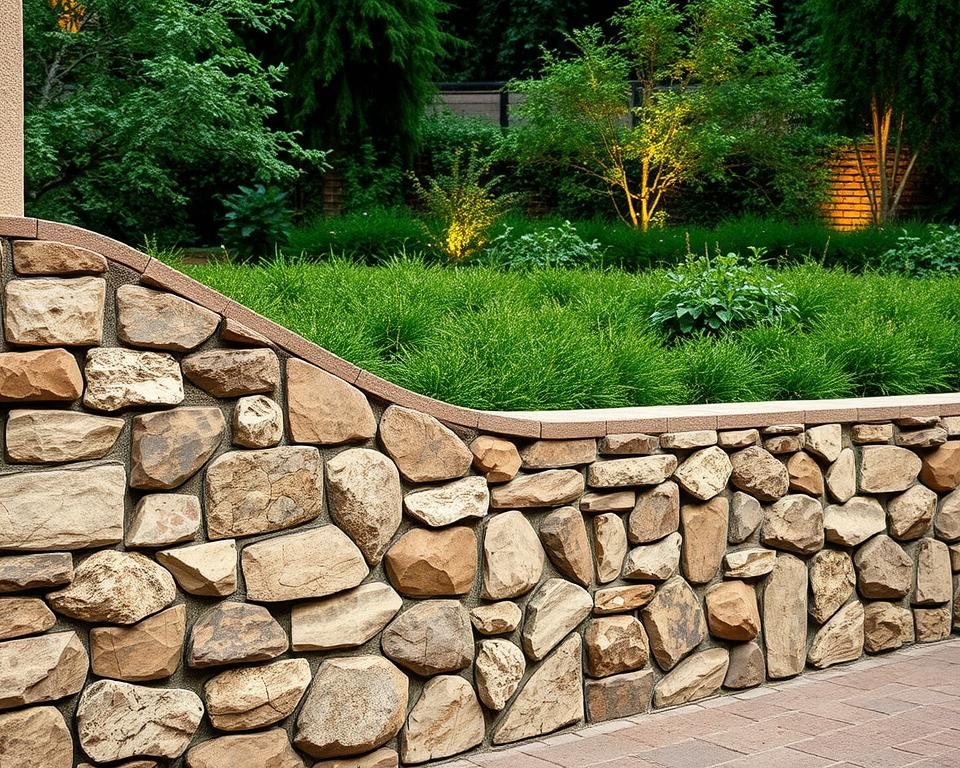
Traditional dry-stone and cottage garden looks
Dry-stone wall design uses no mortar, relying on skillful interlocking and gravity. The finish is tactile and timeless, with irregular courses that age gracefully.
A cottage garden wall suits meandering borders and informal beds. It looks at home beside roses, foxgloves and herbaceous mixes. Famous examples include the Cotswolds drystone walls and Lake District boundary walls, both valued for their historic charm.
These walls create pockets for wildlife. Small gaps offer shelter for insects, beetles and solitary bees. Warm stone faces support lichens and moss, enhancing biodiversity.
Contemporary stacked stone and minimalist layouts
A contemporary stone wall favours thin, coursed or veneered units laid in clean horizontal lines. The result is sleek and restrained, ideal for modern terraces or courtyards.
Pair a contemporary stone wall with simple planting, concrete paving or timber decking. Minimalist lighting, such as recessed LED strips, sharpens the geometry and adds evening focus.
Choose consistent textures and tones to reinforce the modern palette. Granite or sawn limestone produce smooth faces that complement steel or glass features.
Integrating planting and stone for naturalistic effect
Planting with stone softens hard edges and makes a wall feel lived-in. Use crevice planting in gaps for alpines and drought-tolerant species like sedum and saxifrage.
Climbers such as honeysuckle and clematis can be trained over lower walls to add scent and seasonal interest. Create planted pockets for perennials to nestle between larger stones.
These strategies boost ecology. Walls with planting provide habitat for insects, small mammals and birds, while promoting a layered visual texture across the garden.
| Style | Key features | Best planting partners |
|---|---|---|
| Traditional dry-stone | Irregular courses, no mortar, historic character | Foxgloves, primrose, thyme, native grasses |
| Cottage garden wall | Meandering lines, informal joins, wildlife pockets | Roses, lavender, geraniums, honeysuckle |
| Contemporary stone wall | Thin coursed stone, clean horizontal lines, veneered finishes | Structural grasses, sculptural succulents, clipped hedging |
| Planting-integrated walls | Crevice planting, planted pockets, climber supports | Sedum, saxifrage, clematis, alpine perennials |
Construction methods and wall types
Choosing the right construction method shapes both appearance and performance of a garden wall. Below are the core approaches used across British landscaping, with practical notes on materials, skills and site needs.

Dry-stone walling techniques and advantages
Dry-stone techniques rely on careful stone selection, tight interlocking and thoughtful placement rather than mortar. Builders form a solid hearting of smaller stones within the wall, set through-stones that tie the faces together, and give the elevation a slight batter for stability.
Advantages are clear: flexibility to settle without cracking, natural permeability that helps drainage, and habitat benefits for insects and small mammals. Skilled craft is essential; many practitioners train with the Dry Stone Walling Association or similar bodies to master traditional methods.
Mortared stone walls for structural applications
Mortared stone wall construction suits higher walls or contemporary finishes where precise joints are required. Key choices include lime mortar and cement mortar. Lime mortar allows breathability and slight movement in older settings, while cement mortar offers greater immediate strength for heavy loads.
Best practice includes correct bedding, regular movement joints where long runs or temperature shifts occur, and neat pointing for weather protection. Use appropriate mixes for the stone type to avoid staining or rigidity that causes cracking.
Retaining walls and terracing solutions for sloped gardens
Engineering matters most when soil must be held back. A retaining stone wall must manage water with weep holes, gravel backfill and, where needed, drainage pipes to prevent pressure build-up. Geogrids and reinforcement can increase permissible heights while keeping a natural look.
As a rule, short unreinforced walls perform well with good batter and firm foundations. For taller structures or complex slopes it pays to consult a structural engineer to specify foundation depth, reinforcement and safe maximum heights for a terracing garden.
| Method | Typical use | Materials | Key benefits |
|---|---|---|---|
| Dry-stone | Boundaries, cottage gardens, low terraces | Local stone, hearting, through-stones | Permeable, wildlife-friendly, long-lived |
| Mortared stone | Structural walls, formal finishes, higher heights | Stone, lime or cement mortar, pointing tools | Precise finish, strong load-bearing capacity |
| Reinforced retaining | Sloped sites, terracing garden, raised beds | Stone, geogrid, weep drains, compacted sub-base | Controls soil, allows higher walls, suited to landscaping |
Site preparation and foundations
Good site preparation makes the difference between a lasting wall and one that needs frequent repair. Start by checking soil type and any signs of standing water. Clay, sand and peat behave very differently under load. A quick spade test and a visual check for springs or damp patches will show whether you need extra drainage or a deeper base.
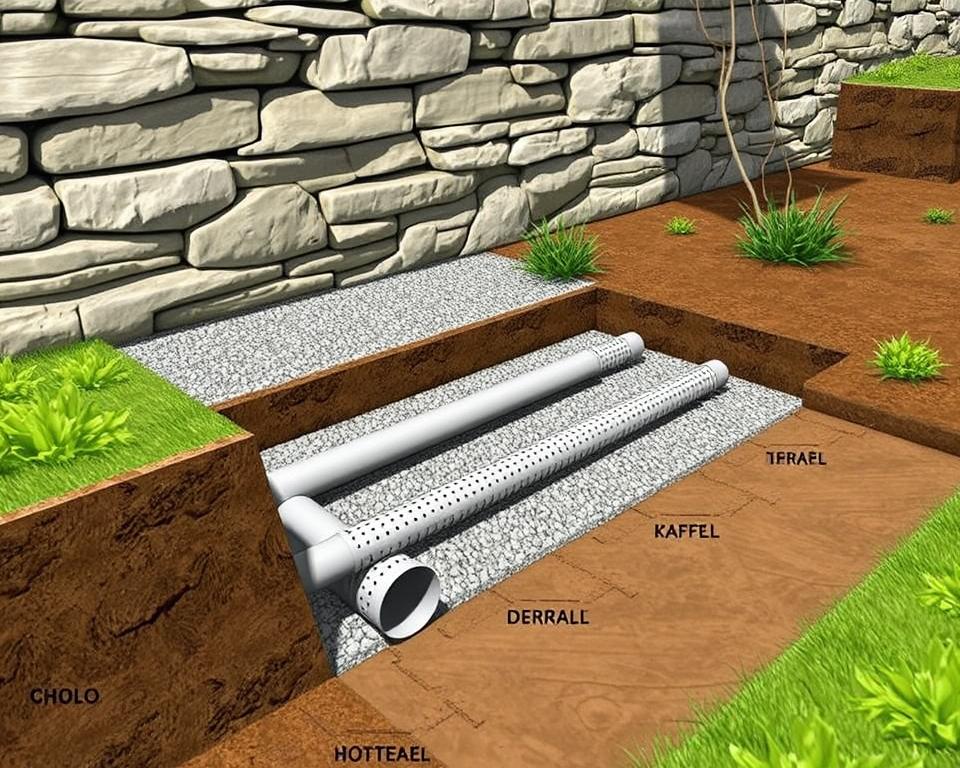
Assess groundwater level before you dig. If water lies near the surface, plan diversion of surface water and consider sub-surface drainage. Proper drainage for stone walls prevents pressure build-up behind the structure and reduces frost damage in winter.
Follow these practical steps for excavation and base preparation:
- Mark out the line of the wall and set string lines for a straight footprint.
- Excavate to the required depth, allowing for a compacted Type 1 hardcore sub-base.
- Lay a blinding layer of sand or gravel, then compact before placing concrete footing for mortared walls.
- For dry-stone walls, form a firm, compacted stone foundation that spreads load evenly.
Typical footing dimensions depend on wall height and loading. As a rule, footings should be wider than the wall and proportionate to height. Use Type 1 hardcore to provide a stable sub-base and reduce settling over time.
Cold weather affects foundations through frost heave. In the UK, foundations must be set below the local frost line to limit movement. Where frost depth is a concern, choose frost-proof foundations UK solutions such as deeper footings or insulated strips beneath the concrete.
For tall or load-bearing walls, add frost protection measures: increase footing depth, use thermal insulation at the base or combine both. Always cross-check designs with Building Regulations and seek engineer guidance if ground conditions are complex or if the wall supports significant load.
Good practice combines correct garden wall foundations, careful drainage for stone walls and appropriate frost-proof foundations UK so the structure performs well through wet seasons and freezing winters.
Cost considerations and budgeting
Choosing stone for a garden wall involves choices that shape the project budget. Material selection, groundworks and the complexity of the design each influence the overall spend. Below is a clear breakdown to help homeowners in the UK plan realistically.
Material costs vary by stone type and finish. Sandstone and limestone often work out cheaper per m2 than granite. Suppliers may quote by the tonne for rough stone or by the square metre for cut, dressed units. Expect to add mortar or lime, drainage aggregates, geotextile membranes, coping stones and basic tools to the list. Rare or specially cut stone, intricate finishes and specialist copings become the main cost drivers.
Below is a compact table showing typical cost factors and what they affect in a build.
| Item | Typical impact on budget | Why it matters |
|---|---|---|
| Stone type (sandstone, granite) | High variance | Price per tonne or m2 changes with rarity, strength and finish |
| Mortar, lime, drainage | Moderate | Essential for longevity and structural performance |
| Coping stones and finishes | Variable | Affects weatherproofing and appearance |
| Tools and plant hire | Low to moderate | Short-term hire can add significantly on small jobs |
| Cutting and finishing | Often high | Skilled cutting increases labour time and waste |
Labour choices shape the project timeline and final quality. A DIY approach saves on upfront fees but demands time, correct tools and skill. Complex dry-stone walling or retaining structures usually require trained stonemasons or landscapers. For accurate comparison, ask for itemised quotes and check trade memberships such as the Federation of Master Builders. Typical stone wall labour costs rise with wall height, curvature and drainage needs.
Obtaining three quotes reduces risk of underestimating time and cost. Skilled teams can reduce waste and speed up installation, which can offset higher hourly rates.
Long-term lifecycle costing looks beyond installation. Consider whole-life spend: initial outlay, periodic repointing, occasional repairs and the added value to property. A more expensive granite wall may cost more initially but require far less repair, lowering the lifecycle cost landscaping over decades.
Scenarios help clarify choices. A budget sandstone wall may suit a small cottage garden where savings matter. A high-end, well-built granite wall could prove economical for a boundary that must last a lifetime and uplift resale value. Weigh maintenance cycles, expected repair frequency and potential uplift in property appeal before deciding.
Planning permission, regulations and party walls
Before you build a natural stone garden wall, check planning rules and safety requirements. Small projects often fall outside formal permission, but exceptions apply in sensitive locations. Early checks save time and prevent disputes with neighbours or the local council.
When planning permission may be required in the UK
Most garden walls under 1 metre beside a highway, or under 2 metres elsewhere, do not need planning permission garden wall UK. Conservation areas, listed buildings and certain highways can change those limits. Consult your local planning authority or the Planning Portal to confirm whether your site needs formal approval.
Building Regulations and structural safety considerations
Building regulations stone wall apply when a wall acts as a retaining structure, exceeds a specified height, or forms part of a building. Regulations focus on structural safety, drainage and foundations. For load-bearing walls or sites with potential ground movement, commission structural calculations from a chartered engineer to meet compliance and ensure longevity.
Neighbour agreements and party wall implications
Work close to shared boundaries can trigger the Party Wall etc. Act 1996. If foundations or a common boundary are affected, serve the appropriate notices and seek a party wall agreement in writing. If neighbours object, appointing a party wall surveyor helps manage inspections, schedules and dispute avoidance.
For straightforward projects, clear documentation and early neighbour contact usually prevent problems. For larger or complex builds, professional advice from council planners, structural engineers and party wall surveyors protects your investment and reputation.
Sustainability and environmental impact
Choosing materials and methods for a garden wall can cut carbon, support local business and create vibrant wildlife spaces. A sustainable garden wall blends longevity with low impact. Small design choices make a big difference for habitat creation, water movement and material reuse.
Choosing reclaimed or local stone
Opt for a reclaimed stone wall to reduce embodied carbon and keep an authentic, weathered look. Reclaimed stone often has a natural patina that suits cottage and heritage schemes. Using locally quarried stone trims transport emissions, matches regional colour palettes and helps British suppliers such as Marshalls or Hanson when local sourcing is available.
Permeability and habitat creation
Dry construction encourages permeability. Gaps, ledges and planting pockets let water pass and form microhabitats for insects, amphibians and small reptiles. Designers can plan crevices and sheltered ledges to boost biodiversity garden walls without compromising structure.
Eco-friendly mortars and practices
Where mortar is needed, choose lime-based mixes over high-CO2 cement mortars. Lime mortar breathes, flexes with thermal movement and is easier to repair. Seek suppliers offering certified sustainable materials and reuse surplus stone on site to cut spoil and waste.
Practical steps for greener builds
- Prioritise a reclaimed stone wall for embodied carbon savings and character.
- Source local stone to reduce transport miles and support quarry jobs.
- Use dry-stone techniques where possible to improve permeability and create biodiversity garden walls.
- Choose an eco-friendly mortar, such as NHL lime, for mortared sections to improve breathability.
- Minimise excavation spoil, reuse offcuts and follow responsible disposal for waste materials.
These measures provide a robust, attractive result that aligns with modern sustainability goals. Thoughtful choices lead to a garden wall that performs well, looks right for place and supports wildlife for years to come.
Maintenance tips to preserve elegance
Regular care keeps a garden wall looking its best and avoids costly repairs. Small checks every season make a big difference for long-term stone wall maintenance UK. Focus on gentle cleaning, timely repairs and sensible management of biological growth to preserve the stone’s appearance and structure.
Cleaning methods suitable for natural stone
Start with low-pressure washing and soft brushes to clean dirt and grime from a clean natural stone wall. Use mild, pH-neutral detergents where needed and rinse thoroughly with clean water.
Avoid abrasive blasting, acid cleaners or strong bleach solutions; those can erode porous stones like sandstone and damage limestone. For delicate limestone, consult a specialist conservator before attempting any cleaning.
Repairing joints, replacing stones and repointing
Inspect mortar joints and stone bedding for signs of crumbling or movement. Loose stones or gaps often signal the need for repointing stone wall work.
When repointing stone wall sections, choose lime mortar where the original construction used soft, breathable mortars. Lime mortar allows moisture to evaporate safely and matches historic textures.
Use matching stone for replacements and set new units on a compacted bed of suitable mortar. If cement was used originally, assess compatibility before switching to lime; mixing incompatible mortars can cause further decay.
Preventing and treating biological growth like moss and algae
Manual removal with a soft brush is the least invasive way to remove moss stone wall patches without harming the substrate. Work gently to lift growth from crevices rather than scraping hard.
For persistent growth, apply a masonry-approved biocidal wash following manufacturer instructions and local regulations. Improve drainage and increase sunlight where possible to reduce re-growth.
Recognise that some lichen adds character and supports biodiversity. Balance aesthetic aims with ecological value when deciding whether to remove any growth.
| Task | Recommended action | Frequency |
|---|---|---|
| Surface cleaning | Low-pressure wash, soft brush, mild detergent | Annually |
| Joint inspection | Check for crumbling mortar, loose stones | Biannually |
| Repointing | Use lime mortar for breathable joints; match original materials | As needed (typically every 10–30 years) |
| Moss and algae control | Manual removal, biocidal wash if required, improve drainage | Seasonally |
| Stone replacement | Fit matching stone onto suitable mortar bed; seek a stonemason for complex work | As required |
Incorporating lighting and accessories
Thoughtful lighting and well-chosen stone wall accessories transform a garden after dusk. Use a mix of subtle illumination and practical fittings to highlight texture, create safe routes and provide comfortable seating next to stone features.
LED uplighting and integrated step lights for ambience
Position LED uplighters to accent the grain and joints of natural stone without causing glare. Outdoor LED wall lights with warm colour temperatures bring out honey and grey tones in sandstone and limestone.
Choose low-voltage systems for energy efficiency and easy maintenance. Recessed step lights work well on terraces and steps to ensure safe circulation while preserving a relaxed evening mood.
Seating, planters and decorative elements that complement stone
Embed a seating stone wall or add a stone bench seat that matches the wall’s texture for cohesion. Integrate planters into the wall to soften edges and create pockets of planting.
Use durable fittings such as stainless steel or galvanised brackets for mounted accessories. Weatherproof cushions extend comfort; choose neutral fabrics that contrast the stone without overpowering it.
Security and safety considerations for garden walls
Design walls with safe heights and secure coping finishes to reduce climbability and improve boundary protection. Make sure lighting covers pathways and entrances to deter unwanted access while guiding movement at night.
Electrical work for garden wall lighting must comply with Part P of the Building Regulations. Always hire a qualified electrician to install circuits, ensuring safety and legal compliance.
Conclusion
This natural stone garden wall summary pulls together the practical and aesthetic points covered in the guide. Natural stone offers proven durability, a wide range of textures and colours, and strong long-term value for UK gardens when the stone type, construction method and finish are chosen with care. Whether you favour a traditional dry-stone look or a contemporary stacked finish, the material’s resilience and timeless appeal make it a sound investment.
For garden wall final considerations, begin by assessing your site, budget and drainage. Select a stone and construction approach suited to the slope, soil and desired maintenance level. Consult local suppliers and qualified tradespeople such as stonemasons or landscapers, and check planning rules and party wall requirements before work starts to avoid delays or disputes.
This elegant garden stone summary underlines the payoff for careful planning: a sustainable, low-maintenance feature that enhances garden character and property value for decades. Use the detailed sections of this guide when specifying materials and methods, and prioritise proper installation to ensure long-term performance and visual harmony in your outdoor space.
FAQ
What are the main benefits of installing a natural stone wall in a UK garden?
A natural stone wall enhances aesthetics while providing practical functions such as boundary definition, seating, terracing and structural support. Stone offers long-term durability—granite, sandstone and limestone resist weathering far better than timber—and requires minimal routine care beyond occasional repointing and cleaning. Well-built stonework also improves kerb appeal and can increase property value, making it a sound long-term landscape investment.
Which stone types are best for garden walls and how do I choose?
Common options include sandstone (warm hues, workable), limestone (classic pale tones), granite (very hard, ideal for structural or coastal sites) and slate (thin, platey textures for cladding). Choose by matching texture and colour to your house, paving and planting palette. View sample panels in natural light and request reclaimed or locally quarried stone to reduce embodied carbon and ensure regional harmony.
Should I use dry-stone or mortared construction?
Dry-stone suits traditional, wildlife-friendly features and provides permeability and flexibility, but requires specialist skills. Mortared walls are preferable for higher, load-bearing or highly finished walls. Where mortared, consider lime mortar for breathability and movement, reserving cement mortar for applications demanding greater rigidity. The choice depends on desired appearance, function and site constraints.
How should I prepare the site and foundations for a stone wall in the UK climate?
Assess soil type, groundwater level and surface-water flow. Excavate to the required depth, install a compacted hardcore sub-base (Type 1) and lay an appropriate footing—concrete for mortared walls, compacted stone for dry-stone. Provide sub-surface drainage and ensure foundations extend below expected frost depth to prevent heave. For tall or retaining walls, consult a structural engineer and follow local Building Regulations.
When is planning permission or Building Regulations approval needed?
Small garden walls are often permitted development—typically under 1 metre where adjacent to a highway or under 2 metres elsewhere—but exceptions exist for listed buildings, conservation areas and highway verges. Building Regulations may apply for retaining structures or where the wall affects a building. If your work affects shared foundations, the Party Wall etc. Act 1996 may require notices or a party wall surveyor.
What drainage and frost measures are essential for retaining walls and terracing?
Effective drainage is critical: use gravel backfill, perforated drainpipes (weeping tiles) and geotextile to prevent soil migration. Incorporate a free-draining backfill layer and consider geogrids for reinforcement on steeper slopes. Ensure footings sit below the local frost line or include insulation to limit frost heave. Adequate weep holes and outlets prevent hydrostatic pressure behind the wall.
How much does a natural stone wall typically cost in the UK?
Costs vary by stone type, finish, wall height and complexity. Material costs depend on stone rarity and sourcing; granite is usually more expensive than sandstone. Labour for specialist dry-stone walling or engineered retaining walls increases the budget. Consider whole-life cost: higher initial outlay for quality stone often yields lower maintenance and greater longevity, improving value over decades.
Can I use reclaimed or local stone to improve sustainability?
Yes. Reclaimed stone reduces embodied carbon and provides authentic patina. Locally quarried stone lowers transport emissions and often matches regional vernacular. Both choices support sustainability goals. Pair them with lime-based mortars and responsible site practices—minimising spoil, reusing materials and sourcing certified suppliers—to reduce the project’s environmental impact.
What maintenance does a natural stone wall need to remain elegant?
Routine maintenance is modest: gentle cleaning with low-pressure water and soft brushes, occasional repointing using compatible mortar (preferably lime where appropriate) and timely replacement of loose stones. Control biological growth with manual removal and approved, masonry-safe biocides when necessary. Improve drainage and light exposure to reduce moss and algae growth, while recognising that some lichen can add desirable character.
How should I brief a stonemason or landscaper to get the result I want?
Provide clear specifications: desired wall height and length, planned function (retaining, decorative, seating), preferred stone type or photo references, finish (dry-stone or pointed), budget and timeline. Include site photos, sketches and details on drainage or foundation concerns. Ask for references, membership of trade bodies (such as the Federation of Master Builders) and a written quote outlining materials and guarantees.
What planting and lighting strategies work best with stone walls?
Integrate crevice planting and alpines in dry-stone gaps, add climbers such as honeysuckle or clematis for vertical interest, and use perennials in recessed planters. For lighting, choose warm LED uplighters to accent texture, recessed step lights for safety and low-voltage systems for efficiency. Position lights to avoid glare and highlight coping, while ensuring electrical work complies with Part P and is completed by a qualified electrician.
Are there regulations or neighbour issues I should consider for boundary walls?
Yes. Check local planning rules for wall height near highways or in conservation areas. If the wall affects a shared boundary or foundations, serve party wall notices under the Party Wall etc. Act 1996 and consider appointing a party wall surveyor. Clear communication with neighbours and written agreements help avoid disputes and delay.
When should I consult a structural engineer or seek specialist advice?
Consult a structural engineer for retaining walls above commonly accepted unreinforced heights, where ground movement or surcharge loads are expected, or for complex terraces. Seek specialist dry-stone wallers for traditional techniques and conservation areas, and a conservation specialist for sensitive stone such as delicate limestone or when working on listed structures.
Where can I source quality stone suppliers and tradespeople in the UK?
Source stone from reputable quarries and suppliers—regional quarries often supply Cotswold, Yorkshire or local stone varieties—and visit reclaimed-stone yards for characterful material. For tradespeople, seek members of recognised organisations like the Dry Stone Walling Association or the Federation of Master Builders, and request portfolios, references and multiple quotes before hiring.